Submitted by Kerry Summers on
Scaling AI Across the Business
AI is no longer an isolated experiment sitting within IT or innovation labs. For CLOs, the challenge is ensuring that learning plays a critical role in helping the organisation move beyond pilots to tangible enterprise-wide outcomes.
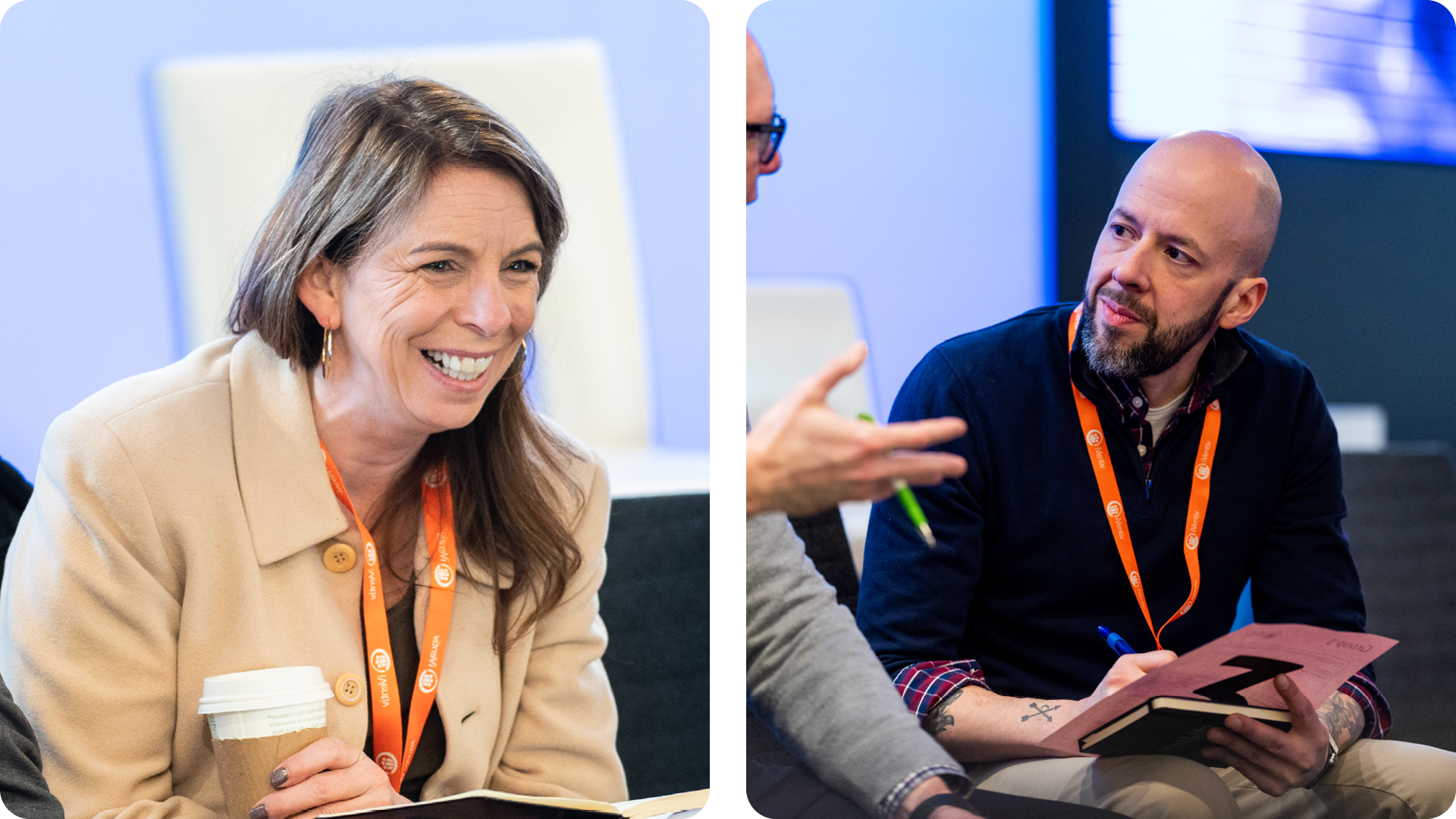
Participants emphasised the importance of creating safe spaces where employees can share ideas, test prototypes, and even admit to failures without fear. This psychological safety enables experimentation at scale.
Another priority was democratising access: everyone in the business, from frontline employees to senior managers, needs opportunities to explore how AI can help them work smarter. Pilots and proof-of-concepts were seen as critical confidence-builders—small wins that pave the way for broader adoption.
CLOs also agreed that executive sponsorship makes or breaks success. When leaders actively champion AI, communicate a bold vision, and model curiosity themselves, experimentation becomes embedded into organisational DNA.
Rethinking Skills Strategies in the AI Era
The conversation quickly turned to the future of skills. Participants agreed that AI is accelerating the need for clarity on what skills truly matter, and how they should be measured.
CLOs see AI as a tool to personalise learning and make the “what’s in it for me” clear to every employee. At the same time, leadership skills remain difficult to identify and evaluate; there was consensus that the best measurement comes through real-world application rather than theory.
Playbooks and roadmaps help bring clarity to skills strategies, but flexibility is vital. Whether skills are gained through formal training, project work, or career rotations, what matters most is demonstrable capability. Career mobility is becoming central, with employees expecting to prove and apply skills across multiple contexts.
The group’s shared conclusion?
CLOs must move beyond transactional learning delivery to shape enterprise talent strategies where skills act as the core currency of growth and adaptability.
Building Learning Cultures That Balance Engagement and Performance
If AI is transforming how people learn, CLOs must rethink the cultural foundations of learning itself. Several participants warned against over-indexing on engagement at the expense of performance.
Instead, CLOs described the need to combine motivation through small wins, such as badges and certifications, with a clear link to business outcomes. Personalisation plays a big role, as context—economic, cultural, organisational, and industry—determines what works best in practice.
Ultimately, the most effective learning cultures were seen as those that make learning meaningful to individuals while also delivering measurable business impact.
What Leaders Need to Navigate Disruption
External change is relentless, and the CLOs in this group debated what capabilities leaders must now build to thrive in this environment.
The group agreed that leaders need clarity of vision paired with agility to adapt quickly, strong human skills such as curiosity, empathy, and courage, and the ability to shift perspectives between the big picture and immediate priorities. More than process management, leadership now requires enabling teams to embrace identity shifts and reinvent themselves.
Above all, self-awareness was described as the glue that ties these skills together, ensuring leaders can inspire resilience and trust in their teams.
Reshaping HR with AI
Susie Lee, CLO in Residence at Degreed, reminded participants that the AI revolution is already here. With more than 11 million jobs expected to be reshaped by 2028, the stakes are high.
Her analysis was stark: while CEOs express declining confidence in their people’s preparedness, L&D budgets have been cut by more than a third since 2022.
The message?
CLOs must achieve more with less.
Susie traced the evolution of HR roles—from administrators to curators and marketers, and now to AI architects and strategists. She urged CLOs to reframe AI as a catalyst, not a threat, citing examples of organisations already realising business impact, from Colgate generating $50M in new business through digital upskilling, to AstraZeneca cutting costs by reducing its tech stack.
Her call to action was simple but powerful: “What will you do differently to prepare for the shift?” For Susie, CLOs must invest with purpose, experiment boldly, and ensure transformation remains both ethical and human-centred.
Key Themes for CLOs
While the dialogue was wide-ranging, five themes consistently emerged:
- Scaling AI from experimentation to transformation
- Redefining skills and career mobility
- Building learning cultures that balance engagement and performance
- Equipping leaders for disruption
- Positioning HR as a catalyst for change
Final Reflection
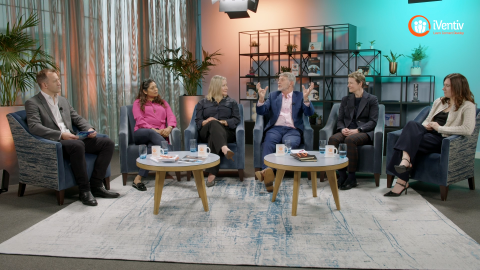
The CLOs in California closed their conversations with a sense of urgency. To move forward, organisations need to equip leaders with agility and human-centric change skills, embrace AI as a driver of strategic transformation, use pilots to build confidence, and create safe spaces where experimentation is both encouraged and rewarded.
For CLOs everywhere, the message is unmistakable:
AI is changing not just what we learn, but how we define skills, design careers, and prepare leaders for the future.
The role of the CLO is shifting from being a steward of learning programmes to being a strategic architect of transformation.
In an era of disruption, learning leaders have the chance to do more than adapt—they can lead. The challenge is to seize this moment, to reimagine what learning means, and to ensure that people and organisations alike are prepared not just to survive change, but to thrive in it.
Curious to hear more?
Let’s continue the conversation. Join us for an upcoming Executive Knowledge Exchange near you, now, and join iKnow to read this Executive Summary and more in this series in full.
Related Resources
- Leading in the Age of AI: The Future of Learning, Talent, and Leadership
- The Future of Skill Development: Balancing AI, Expertise, and Learning
- What’s Now and What’s Next: Inside the Minds of Today’s Learning Leaders
- Leveraging AI for Seamless Employee Skill Management at E.ON
- AI, Performance, and the Problem of L&D Complacency with The Learning Hack Podcast and Charles Jennings
- AI and the Future of L&D with Trish Uhl, Senior AI Specialist, Keynote, Advisor, and author of Learning AI