What Makes a Good Learning and Development Budget in 2026?

Updated April 2026

By Richard Parfitt (Marketing Director, iVentiv and author of the iVentiv Budget Report)

As an L&D leader, you are certainly not alone in wondering if your budget matches up to the expectations placed on you and your team. It’s no surprise that 60% of CLOs say measuring ROI is one of their top priorities.

But what makes a good L&D budget in 2026? How much should your organisation be spending? What figures should you be benchmarking against?

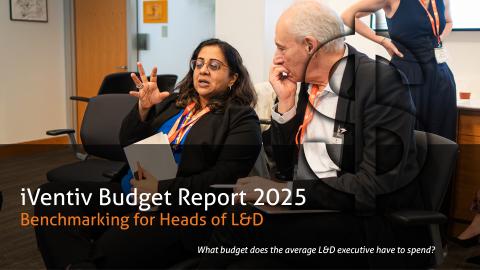
Download the iVentiv Budget Report today for a detailed breakdown of how much senior Learning and Talent Executives have at their disposal in 2026, including average budget per employee. The report also lays out what L&D’s biggest spenders and biggest employers are prioritising.
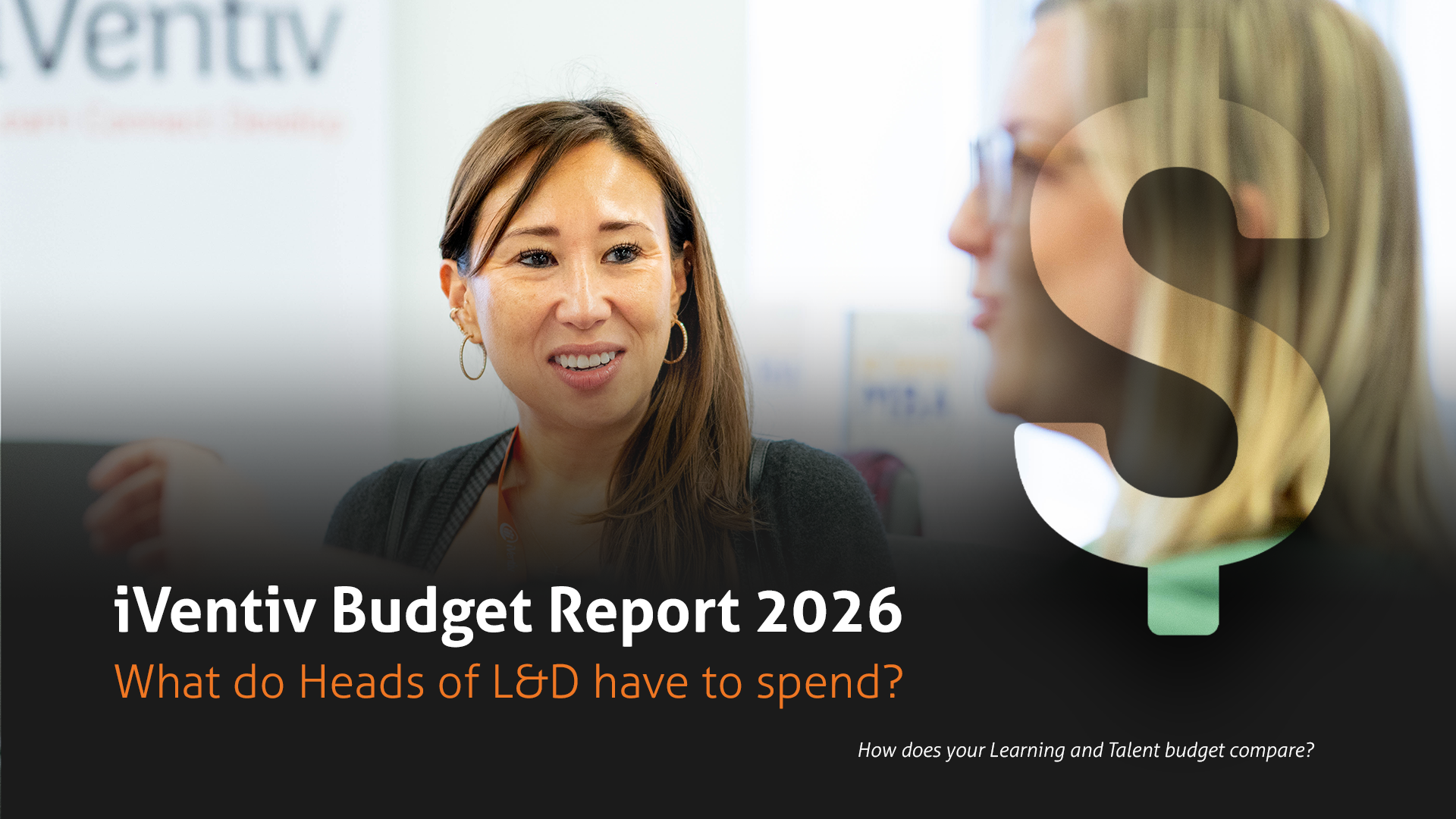
The cover of the iVentiv Budget Report 2026

Key Takeaways

  • The average L&D budget for senior leaders in 2026 is $11.8 million, with significant variation across organisations
  • Spend per employee differs widely, from over $1,700 in smaller organisations to under $300 in larger enterprises
  • CLOs with the largest budgets prioritise Future of Work, Skills, and Learning Platforms
  • The biggest employers place more emphasis on AI as a core L&D priority

What is the Average L&D Budget in 2026?

In terms of the headline number, the average L&D executive holds a budget of $11.8 million.

That’s based on survey responses from almost 500 global Heads of Learning & Development and Talent, from organisations with tens of thousands of employees on average. Each respondent completed a survey between April 2025 and March 2026 ahead of an iVentiv event for senior Learning and Talent leaders.

Respondents were asked to share the budget under their specific control, so that number may reflect the discretionary budget under the control of the individual Chief Learning Officer, rather than the absolute total spend on L&D.

That said, the spread is revealing, with around 50% of L&D leaders holding a budget of $1 million or more, and 6% over $100 million.

What is the Average L&D Spend Per Employee?

Survey respondents were also asked to share the number of employees or internal customers under their remit. Based on those responses, the average Learning spend per employee is $902.

Once again, there is a wide range of spending levels. Executives responsible for fewer than 5,000 employees manage an average total budget of $4.3 million, but a spend per employee of $1,735. In larger organisations, employing over 100,000 people, the average budget is over $25 million, but the spend per employee is $259.

Where do CLOs with the Biggest Learning & Development Budgets Spend Their Money?

What the report also shows is that the Executives with the biggest budgets are more likely to prioritise certain topics compared to their less well-resourced peers. Respondents with budgets of $100 million+ were more likely to be focusing on:

  • The Future of Work
  • Reskilling and Upskilling
  • Learning Platforms (LMS/LXP)

Learning leaders with the biggest budgets are concerned with designing work and the “skills needed for the future”, driving culture change in a scalable way amidst “persistent change”.

Where do the Biggest Employers Spend Their Learning & Development Budgets?

Pricing for many Learning products and platforms is based on a price per user, so it is worth asking where the biggest employers are most likely to focus their efforts and their money as well.

When it comes to how the biggest employers spend their Learning & Development budgets, Chief Learning Officers and Heads of Learning & Talent are more likely to focus on three key areas:

  • Artificial Intelligence (AI)
  • Learning Platforms (LMS/LXP)
  • Future of Work

The difference is especially striking when it comes to AI, with 74% of L&D budget holders at organisations with more than 100,000 employees saying that Artificial Intelligence is a top priority compared to only 54% at organisations with fewer than 5,000 employees.

Benchmark Your L&D Budget: Download the iVentiv Budget Report

The full iVentiv Budget Report includes a detailed breakdown of the different budgets managed by Learning & Development Executives. That includes figures on the average Learning budget per employee in organisations of different sizes, and how the top priorities for Chief Learning Officers change depending on the size of their budget and workforce.

Download the report for free today.

Frequently Asked Questions

What is an L&D budget?

An L&D budget (Learning & Development budget) refers to the total amount an organisation allocates to training and development activities over a set period, typically annually. This includes spending on leadership development, learning platforms (LMS/LXP), external providers, internal programmes, and workforce development initiatives. Understanding what an L&D budget is helps organisations plan how they invest in skills, performance, and long-term capability building.

What is a good learning and development budget in 2026?

A good learning and development budget depends on organisational size, industry, and strategic priorities. However, current benchmarks suggest that the average L&D budget for senior leaders is around $11.8 million. Rather than focusing solely on total budget, organisations should assess whether their budget for learning and development aligns with business goals, supports key initiatives like Artificial Intelligence and leadership development, and delivers measurable impact.

What is the average L&D budget per employee?

The average L&D budget per employee is approximately $902, based on recent data from global Learning & Development leaders. However, this figure varies significantly. Smaller organisations often invest more per employee, sometimes exceeding $1,500, while larger enterprises may spend closer to $250 per employee. Benchmarking your L&D spend per employee is essential to understand whether your investment is competitive and effective.

How do you calculate a training and development budget per employee?

To calculate a training and development budget per employee, divide your total L&D budget by the number of employees or learners in your organisation. For example, if your annual L&D budget is $10 million and you support 10,000 employees, your Learning & Development budget per employee would be $1,000. This metric is widely used to compare Learning budgets across organisations and to benchmark investment levels.

What should be included in a learning budget?

A comprehensive learning budget should include all costs associated with training and development. This typically covers:

  • Leadership development programmes
  • Learning platforms and technology (LMS/LXP)
  • External training providers and consultants
  • Internal programme delivery and resources
  • Content creation and curation
  • Workforce development initiatives

A well-structured L&D budget ensures that spending is aligned with both immediate training needs and long-term organisational capability.

How can you benchmark L&D budgets effectively?

Benchmarking L&D budgets involves comparing your spending against similar organisations in terms of size, industry, and geography. Key metrics include total Learning budget, L&D spend per employee, and investment in priority areas such as leadership development. Effective benchmarking goes beyond numbers. It also considers how budgets are allocated and whether spending supports strategic outcomes like reskilling, culture change, and digital transformation.

How does L&D spend impact ROI and business performance?

L&D spend plays a critical role in driving organisational performance, but ROI depends on how effectively the budget is used. Investment in training and development can improve employee engagement, productivity, retention, and leadership capability. To maximise ROI, organisations should align their Learning budgets with business priorities, focus on applied learning, and measure outcomes such as performance improvement and skill acquisition rather than just participation rates.
Thumbnail: 
News category: 
Learning & Development
ROI and Data
Latest Trends in Learning

More Insights

When HU-X Founder Tia Katz first attended an iVentiv event, it marked the start of a relationship that would help shape her business, her thinking, and her sense of what’s possible in Leadership Development. Having first attended as a delegate in a corporate role at Citi, she now attends regularly as a sponsor, helping her connect with the iVentiv community of senior leaders in Learning and Executive Development.

“I was just so pleasantly surprised by everything,” she says. iVentiv events are “professional, of course–but also so human and so connecting.”

In this newly released case study, Tia reflects on her journey with iVentiv, from first-time delegate to multi-session sponsor, and shares how these experiences redefined her approach to learning, organisational development, and executive growth. 

Download the case study, and watch the interview now.

“You need to change the people, and changing the people goes through leadership.”
– Christophe Vanden Eede, Global Head of Talent Management, bpostgroup

As the demands on global organisations evolve in the face of disruption, digitalisation, and competitive reinvention, Christophe Vanden Eede’s work at bpostgroup offers a powerful case study in how leadership can catalyse transformation, not just through top-down mandates but by reshaping the very DNA of leadership across every layer of the organisation.

In a recent conversation with iVentiv, Christophe reflected on the seismic changes taking place within the Belgian postal service and how he’s leading an integrated transformation strategy rooted in leadership behaviour. Watch our interview now.

The work of the Chief Learning Officer has always been dynamic. But the conversations captured across iVentiv sessions in Cologne, New York, London, and Copenhagen suggest we’ve entered a new inflection point—one where learning is more visible, more measurable, and more central to strategy than ever before.

This isn’t about checking-off trends. It’s about what’s happening right now inside global organisations that are restructuring the way they define skills, leadership, culture, and capability. Across breakout conversations, fireside chats, and iVentiv’s trademark Collaborative Café, senior learning leaders have reflected openly on what’s working, what’s evolving, and what’s next.

Read on for a detailed and nuanced synthesis—an exploration of facts that are shaping the L&D profession in real time.

“Are we spending too little on L&D?”

If you’re in a senior role in Learning & Development, you probably spend a lot of time worrying about this question. It’s a question that resurfaces in nearly every budget review and vendor conversation in the Learning space. 

Whether you’re setting your internal strategy or shaping the offering of a learning solution, the benchmark for a “good” L&D budget has never been more important — or harder to pin down.

That’s why we put together the iVentiv L&D Budget Report 2025: to provide a clearer picture of what companies are actually spending on L&D today — and what those numbers really say about priorities, value, and the future of work.

Based on responses from 126 senior L&D leaders across global organisations, the report dives into both total budget figures and spend-per-employee breakdowns. 

The headline? L&D budgeting is anything but standard.

Download the report now.

At a time when organisations across the world are rethinking the way they develop and retain talent, Sandvik is taking a holistic, integrated approach to talent optimisation. 

Eva Wikmark Walin, Global Head of Employee Experience at Sandvik, sat down with iVentiv’s Content Manager, Hannah Hoey, to reflect on how the Swedish engineering company is building a connected talent ecosystem, and what others can learn from their journey.

Watch our interview with Eva now to see how you could optimise your talent strategy.
 

In a special episode of The Learning Hack Podcast, recorded live at iVentiv’s Learning Futures London Executive Knowledge Exchange at the Shell headquarters, host John Helmer spoke to three of the leading minds in L&D. 

Against the backdrop of a world that feels more volatile, uncertain, complex, and ambiguous (VUCA) than ever, this episode explores how organisations are rising to meet the pace of change, and what it really takes to thrive in 2025 and beyond.

Featuring expert insights from:

  • Kevin Oakes, CEO of the Institute for Corporate Productivity (i4cp) and author of Cultural Renovation
  • Kim McMurdo, Head of Organisational Development, Standard Chartered
  • Terry Jones, Head of International Talent Development at Palo Alto Networks

this episode delves deep into the core themes shaping today’s workplace: transforming culture, fostering team-centric leadership in an age of hyper-individualism, and harnessing AI to elevate - not replace - human capability.

Whether you're leading a learning function, evolving your company’s culture, or rethinking the role of performance in a tech-driven age, this episode is a must-listen. Find it here and read on to learn more.

“Learning doesn't necessarily have to just be the partner,” says Stacey VanderHeiden Güney, Global Head of Learning at ArcelorMittal University. “It can actually, I think, be the futurist.”

In an era of relentless disruption and global complexity, Learning is no longer a support function – according to Stacey and many Heads of L&D, it’s a strategic lever for transformation. In this conversation with iVentiv, Stacey shares how the world’s leading steel company, ArcelorMittal, is building a future-ready workforce through agile, scalable, and human-centred learning strategies.

Read more and watch our interview with Stacey now.

In the fast-paced world of Learning, Talent, and Executive Development, finding the right events to attend can be overwhelming. Your inbox is overflowing with conference invites, your calendar is packed, and the challenge remains, which events are truly worth your time?

Enter iVentiv, a global leader in Executive Knowledge Exchanges. In 2025, iVentiv is bringing invaluable conversations directly to you, hosted by top global organisations such as Citi, Shell, KPMG, AXA, Bosch, Visa and more.

If you’re seeking more than just another conference, iVentiv’s events are designed to deliver real impact. Read this blog to find out why an iVentiv event should be on your calendar this year.

As digital transformation reshapes the corporate landscape, organisations are rethinking how they manage talent and skills. At E.ON, AI is at the heart of this evolution, revolutionising skill management, employee development, and internal mobility.

Markéta Alešová, Vice President of Global Talent and Diversity, shares how E.ON is leveraging AI to create a more transparent, skills-based workforce while balancing technological innovation with cultural transformation.

Watch our interview with Markéta now to explore how AI-driven insights, an employee-centric approach, and a shift toward an opportunity marketplace are shaping the future of Talent Management at E.ON.

The world of corporate learning, talent, and leadership is undergoing a period of intense transformation. As organisations strive to build resilient workforces and agile leaders, Chief Learning Officers and Heads of Talent, and Leadership face an array of challenges and opportunities.

The conversations at iVentiv’s recent Learning Futures sessions in Atlanta and Paris highlight the pressing themes that are shaping the future of workplace learning. Leadership and Executive Development, Reskilling and Upskilling, AI, and Learning Culture were the four most popular priorities identified by Global Heads of Learning at iVentiv events in 2024, so it’s no surprise to see all four represented in the top priorities of attendees at last month’s events as well.

These sessions, attended by senior learning executives, surfaced key trends, strategic shifts, and organisational imperatives that will define 2025 and beyond. Read all about what's top of your mind for your peers here.

Pages