Submitted by Kerry Summers on
Updated March 2026
By Kerry Summers (Content Marketing Coordinator, iVentiv)
Key Takeaways
- L&D must evolve from training provider to strategic business partner
- Managers are the most powerful drivers of learning impact
- Building a unified learning culture requires global alignment with local flexibility
- Leadership development must extend beyond technical expertise
- AI should enhance, not replace, human-centred learning
This L&D Challenges Podcast from iVentiv’s Learning Futures Basel event in 2024 at the Novartis Campus is a must-listen for C-suite executives aiming to transform Learning and Development into a strategic organisational advantage.
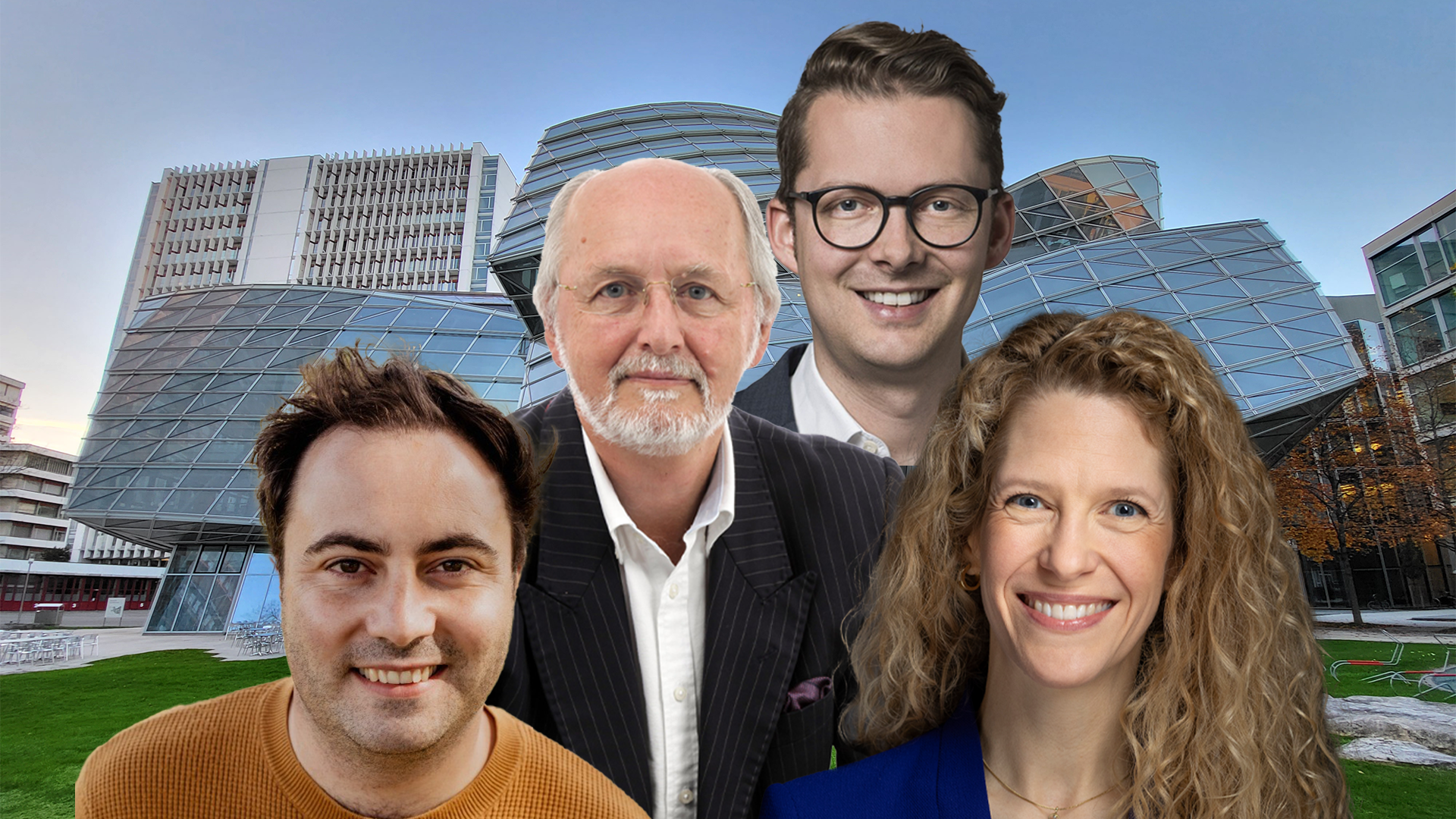
Adam Lacey, Co-Founder of Assemble You and Host of the L&D Challenges Podcast joined iVentiv's Learning Futures Basel for conversations that got to the heart of L&D's biggest challenges.
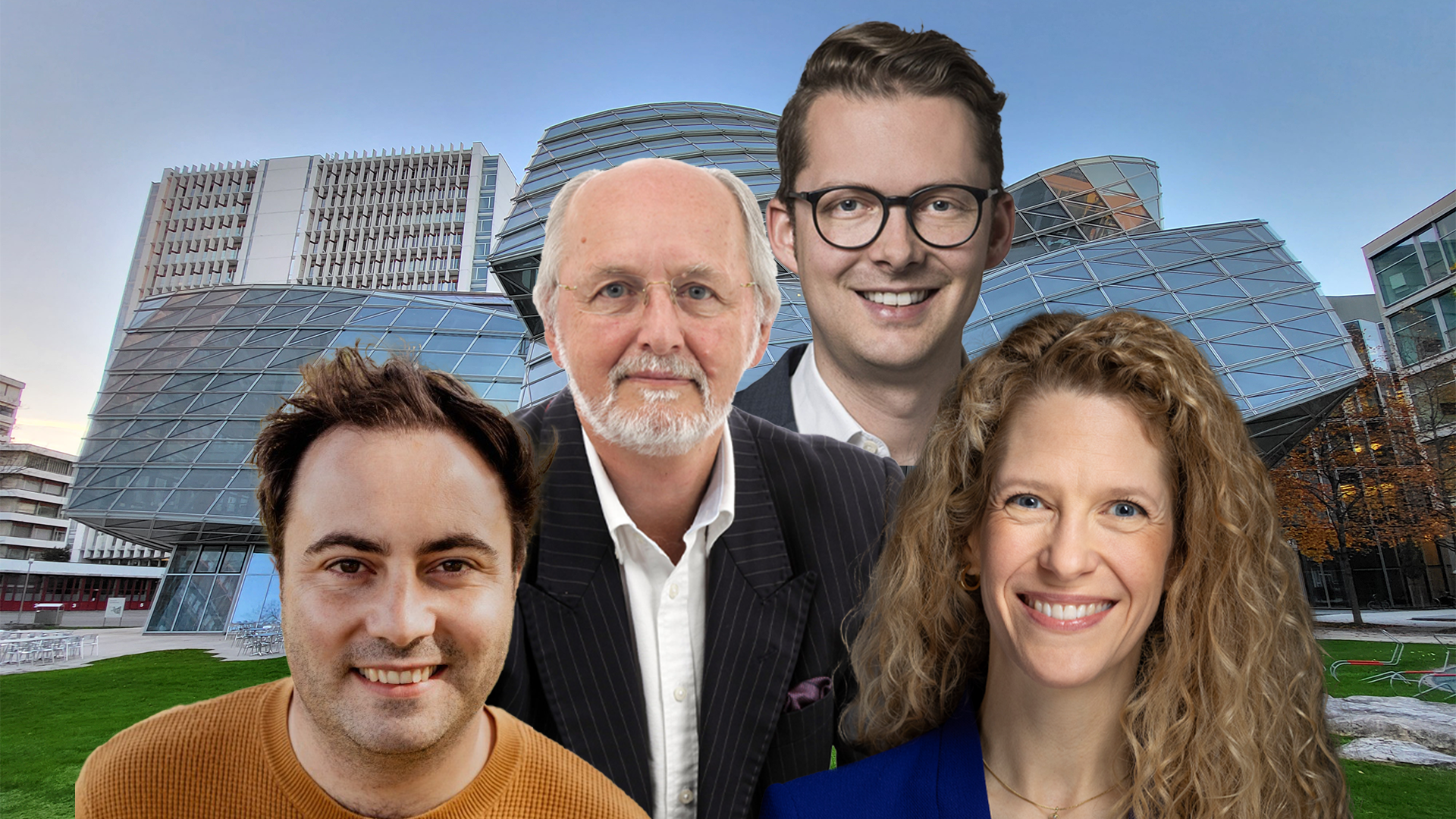
Featuring insights from industry leaders Charles Jennings, Co-Founder of the 70:20:10 Institute, Sina Melder, Head of Global Organisational Development at Lindt & Sprüngli, and Leon Jacob, Director of People Experience at Medbase, this episode delves into demonstrating L&D’s organisational value, fostering a unified learning culture, and leveraging AI beyond content creation.
Join us to discover how these strategies drive innovation, enhance employee engagement, and align global initiatives with local needs, equipping organisations to thrive in a competitive and ever-evolving business landscape. Listen to this podcast in full here.
Demonstrating Value Through Learning and Development
Charles Jennings, Co-Founder of the 70:20:10 Institute and regular iVentiv Event Chair, focused on a fundamental challenge for L&D professionals: demonstrating tangible value to their organisations. He argued that L&D must transition from being perceived as an auxiliary function delivering structured training programs to becoming a value-generating business partner integral to organisational strategy.
Charles underscored that while formal learning pathways are essential for foundational competence, true value is derived from building expertise and supporting learning within the flow of work.
What does a shift like this require?
According to Charles, it requires fostering a culture where continuous improvement, rather than formal learning alone, becomes the norm.
How is this achieved?
He says L&D professionals must collaborate with senior leaders and middle managers to embed developmental conversations into regular team interactions.
Charles went on to say that managers who prioritise people development drive 25% higher productivity and achieve a 40% reduction in turnover rates, demonstrating that investment in learning correlates directly with business outcomes. For executives, he reiterated the importance of championing psychological safety and encouraging risk-taking to create environments where innovation thrives. Organisations with these cultures, he said, are better positioned to adapt and compete in rapidly evolving markets.
Building a Unified Learning Culture
Sina Melder, Senior Global Organisational Development Manager at Lindt & Sprüngli, explored the challenges of fostering a cohesive learning culture within a highly decentralised organisation. With 20 subsidiaries operating independently, Lindt faces significant disparities in L&D maturity and resources across regions.
She shared her vision for achieving learning equity, ensuring that all employees, regardless of location, have access to meaningful development opportunities. This vision will be supported by the rollout of a global HR platform in 2025, designed to standardise access to training and resources across the company.
What does will be crucial for the success of Sina’s vision?
Executive sponsorship; by securing buy-in from local CEOs, she says, Lindt aims to align its global learning strategy while respecting regional nuances.
Sina’s passion for fostering a global learning culture resonated with attendees at Learning Futures Basel. She described the need to balance centralised oversight with local autonomy, ensuring that global initiatives are adaptable enough to meet diverse needs.
For C-suite executives, her message was clear: a unified yet flexible approach to L&D is essential for maintaining competitive advantage and cultivating top talent in a global workforce.
Transforming Soft Skills into Leadership Excellence
Leon Jacob, Director of People Experience at Medbase Group, brought a healthcare-specific lens to the conversation, sharing insights into transforming soft skills into leadership capabilities. Medbase, a leading provider of primary medical care in Switzerland, is navigating the dual challenge of scaling L&D initiatives while shifting cultural perceptions about leadership.
Leon highlighted the unique challenges faced by healthcare professionals who, he said, often prioritise clinical expertise over cross-functional competencies. This focus can limit their development as leaders and collaborators.
How are Medbase addressing this issue?
The launch of a leadership development program aimed at embedding leadership as a core competency across the organisation. Supported by the CEO, this initiative seeks to position leadership as a critical driver of value.
Medbase is also digitising its employee development dialogues, enabling managers to have meaningful conversations about career growth and learning – an approach that not only facilitates scalability but also ensures alignment between individual aspirations and organisational goals.
Leon’s insights underscored the importance of creating systems that support leadership development and build cross-functional skills at all levels.
Leveraging AI Beyond Content Creation
Throughout the conversation, the role of AI emerged as a pivotal topic. While many organisations are in the early stages of AI adoption, the discussions highlighted the potential of AI to revolutionise L&D beyond content creation. Both Sina and Leon emphasised the need for thoughtful implementation, ensuring that AI complements rather than replaces human-centric approaches.
Sina also noted that AI tools can streamline processes such as content curation and learning personalisation, making training more accessible and relevant. However, she cautioned against relying solely on AI, stressing the importance of maintaining a human touch in L&D strategies. Leon echoed these sentiments, emphasizing that AI should be seen as a tool to enhance—not substitute—collaborative and experiential learning.
How can you transform L&D into a strategic driver for organisational success?
For C-suite executives, several critical themes emerged:
1. Embed Learning in Daily Workflows
Move beyond formal training programs to integrate learning into the flow of work, fostering continuous improvement and innovation.
2. Prioritise Leadership Development
Cultivate leadership as a core competency across the organisation, supported by executive sponsorship and scalable systems.
3. Leverage AI Thoughtfully
Harness AI to enhance learning efficiency and accessibility while preserving the relational and human aspects of L&D.
4. Foster Psychological Safety
Create environments where employees feel empowered to experiment, fail, and grow, driving innovation and resilience.
5. Align Global and Local Strategies
Develop cohesive learning cultures that balance global oversight with local adaptability, ensuring equity and inclusivity across regions.
The insights shared in this podcast reinforced the imperative for executives to view L&D as a strategic investment rather than a cost center. By embracing these principles, organisations can position themselves for sustainable growth, enhanced employee engagement, and a competitive edge in an increasingly complex global landscape.
Charles Jennings is the Co-Founder of the 70:20:10 Institute and leading practitioner in innovative talent, learning, and performance approaches. As respected author and speaker, Charles is particularly known for his work with the 70:20:10 model and its use in helping to re-focus L&D's efforts beyond formal training. Charles was Event Chair at iVentiv's first session in 2009 and has since played a pivotal role in the direction and development of the business both as Chair of the iVentiv Advisory Board and regular contributor.
Sina Melder the Head of Global Organisational Development at Lindt & Sprüngli, where she leads company-wide initiatives in Learning & Development, Leadership Development, Talent Management, Culture & Engagement, and Diversity, Equity & Inclusion.
Leon Jacob, Director of People Experience at Medbase Gruppe, is transforming HR into a cohesive, digital-first team focused on employee experience. He is developing a robust Learning & Development function with innovative leadership programs and cross-functional learning initiatives in the healthcare sector.