What’s Now and What’s Next: Inside the Minds of Today’s Learning Leaders

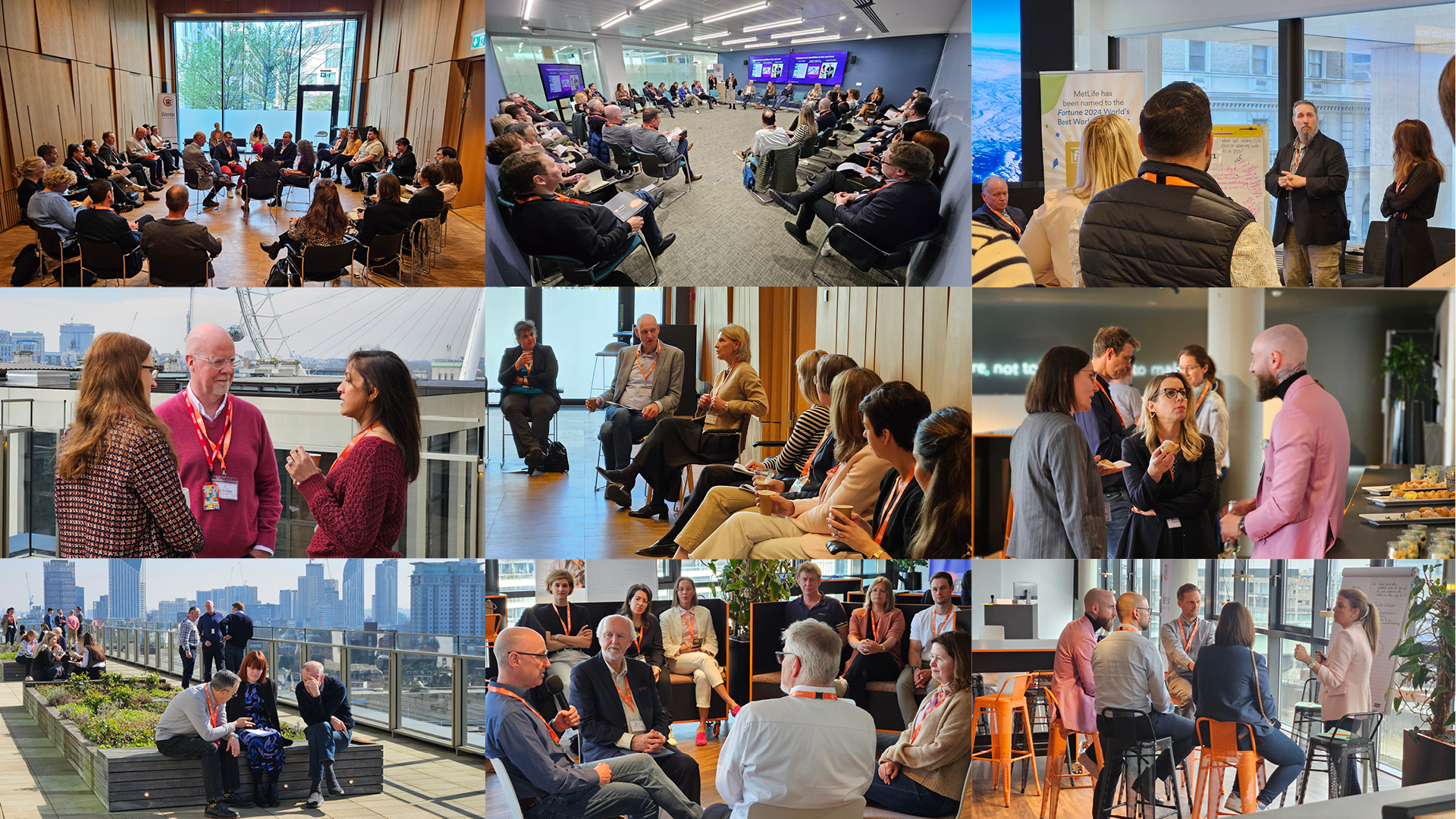
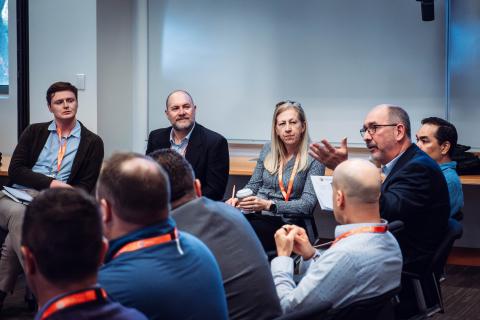
event participants

AI in Practice: Beyond Experiments, Toward Impact

For CLOs, 2025 marks a transition from AI experimentation to enterprise-wide application. Conversations have shifted from curiosity to execution. AI is now being deployed to personalise learning experiences, map organisational skills with greater precision, close capability gaps, and extend development access across a global workforce.

But the discussions didn’t stop at function—they moved into ethics. Learning leaders spoke candidly about their responsibility to embed governance, legal guardrails, and transparency into every AI decision. The aim, they said, is to build trust, reduce bias, and align all digital acceleration with human values.

At the same time, AI integration is reshaping internal priorities. CLOs are investing in digital and data literacy—not only within Learning teams but across the business. And as automation increases, so too does the need to double down on human competencies like creativity, adaptability, and learning agility. These qualities, seen as inherently human, are now becoming strategic.

The Skills Conversation Is Now a Business Conversation

Across sessions, the skills agenda was described not as a HR initiative, but as a business imperative. CLOs reported a growing demand for agility in how skills are defined, developed, and deployed. Strategy is now anchored in a few key questions: What work matters most? What capabilities will drive that work? Where are the gaps?

The foundations of this work include a clear skills taxonomy, integrated systems, and strong governance. But it was culture that emerged as a critical differentiator. Mobility, experimentation, and growth mindsets aren’t afterthoughts—CLOs see them as embedded expectations in high-performing environments.

AI plays a central role here too. It’s enabling faster, smarter skills mapping and supporting real-time decisions. But adaptability—among systems, leaders, and teams—was just as frequently cited as critical to success.

Measurement frameworks that prioritise progress, not perfection, are being used to monitor and refine strategy. And as leaders described, it’s not just about charting where skills are today, but how quickly capability can be built in response to what’s next.

Leadership Development in a Time of Transformation

Executive development is no longer about learning for leadership’s sake. It’s about enabling leaders to accelerate business transformation. The stakes are high, and expectations higher. Leaders, the group stated, are expected to operate like athletes—resilient under pressure, focused on performance, and capable of sustaining energy through uncertainty.

What’s emerging is a model of leadership development that’s deeply contextual, highly practical, and aligned with the lived experience of business challenges. One-size-fits-all has given way to situational learning tailored to both the leader and their ecosystem.

Power skills—empathy, collaboration, communication—are also seen to have taken on new weight. Not as soft skills, but as foundational to strategic execution. CLOs are using storytelling, business-aligned data, and transparent communication to demonstrate how learning outcomes tie directly to business performance.

The language of impact is being adopted with fluency. Learning teams are translating initiatives into narratives that senior stakeholders can understand and champion.

The ROI Equation: Visibility, Value, and Velocity

A common thread across every iVentiv breakout was the question of measurement. Specifically, how learning can be evaluated in ways that are visible, valuable, and velocity-driven.

Learning leaders described the ongoing challenge of budget justification. Many reported that, unlike revenue-generating functions, L&D is still expected to justify its existence in greater detail. 

Technology is beginning to change that equation. Learning teams are using behavioural analytics, coaching data, and time-to-impact metrics to understand where change is happening and how quickly. Backend systems that capture learner interactions are also helping to replace anecdotes with evidence.

But justification also requires a shift in storytelling. CLOs are reframing Learning not as a cost, but as a solution. They’re linking learning to attrition challenges, engagement drops, productivity gaps—and showing where interventions are making a difference.

The insight was clear: people don’t resist change—they resist change without meaning. And often, they don’t leave companies—they leave leaders who failed to lead change with empathy.

Final Thought: The Strategic CLO

Across iVentiv’s spring sessions, one message resonated: Learning is not a support function. It’s a performance driver.

Today’s CLO is navigating AI ethics, building business-aligned skills strategies, redefining executive development, and tracking impact with sharper tools and bolder storytelling. These leaders aren’t waiting for change—they’re leading it.

The role of the CLO in 2025 is strategic, systemic, and central to the business. And as this momentum continues, the future of Learning will be shaped not just by what CLOs do—but by how visibly, collaboratively, and courageously they do it.
To read this Executive Summary and more like it, join iKnow - iVentiv's Global Learning Network - now.
 

Thumbnail: 
News category: 
Learning & Development
Leadership and Executive Development
Reskilling and Upskilling
Artificial Intelligence
Latest Trends in Learning

More Insights

In an age of constant change, Zurich Insurance has embraced a skills-based approach as a core strategy to future-proof its workforce and drive business success. 

In an interview with iVentiv, Adrian Stäubli, former Group Head of Skills Development Solutions at Zurich Insurance, highlighted Zurich’s commitment to identifying, developing, and deploying skills across its global workforce. 

This model isn’t just a tool— to Adrian it’s a "secret ingredient" that touches every aspect of employee development, from career progression to job design, setting Zurich apart as a truly agile and resilient organisation.

Watch our interview now to see how Adrian embraced skills, and how it’s transformed Zurich’s employee experience.


In the ever-evolving world of executive education and corporate learning, partnerships are key to success. iVentiv has nurtured a long-standing relationship with HEC Paris, a prestigious European business school that was founded in 1888, since 2010 and has become a leading institution in Executive Development. Through this collaboration, HEC Paris has not only elevated its presence within the corporate learning community but has also provided valuable insights and support to iVentiv’s events worldwide.

Join us as we dive into the partnership between iVentiv and HEC Paris, how it's bloomed over the years, and where it will go next.

In today’s complex global landscape, even the most experienced L&D executives face a persistent challenge: ensuring alignment and collaboration within large Learning & Development teams spread across geographies, business units, and time zones.

Too often, L&D functions in multinational companies operate in silos. Teams set objectives independently, repeat each other’s work unknowingly, or miss opportunities to scale successful initiatives. Despite good intentions, the lack of structured knowledge-sharing and alignment can hinder progress, dilute impact, and ultimately affect how well organisations respond to change. 

So, how do you create an event designed to build a strong, connected L&D team that learns from each other and works towards a shared vision? Read on to find out.

Whether you’re launching a new initiative, or planning a team-building day, internal corporate events need more than just good food and a decent venue. Without the right strategic groundwork, even the most beautifully executed event can fall flat. 

Instead, before diving into logistics, you should pause and ask the foundational questions that shape a purposeful, effective experience.

This guide explores the key questions to ask before you start planning an internal event to help you clarify objectives, understand your audience, and align the event with your broader organisational goals. Read more.

In today’s competitive, hyper-informed market, you can’t win customer loyalty with a strong product or slick branding alone. Instead, you need trust, relevance, and a consistent demonstration that you understand your customers' needs. 

That’s where customer education events come in. 

These aren’t just glorified sales pitches. They’re strategic opportunities to deliver value, deepen relationships, and build communities around your offering.
When done well, these events don’t just teach; they transform customers into advocates. They help your business stay front-of-mind while giving your clients the tools and insights to succeed with your product or service at the centre of their strategy.

Curious to learn more? Read now.

Large, global Learning and Talent teams are both a strategic advantage and a serious leadership challenge. They stretch across regions, time zones, and business units, and are expected to deliver transformation while operating in a constant state of change themselves. 

For many Chief Learning Officers, the only regular opportunity to bring their teams together is the annual offsite or occasional away day.

The result often defaults into “team building”. Although icebreakers, marshmallow toothpick towers, and trust falls are activities that might boost morale, they rarely help a learning professional facing the practical pressures of AI adoption, skills taxonomies, or strategic workforce planning. 

Global teams need more than a bonding experience. They need shared language, shared strategy, and shared confidence to deliver. 

They need knowledge transfer, not just camaraderie. 

They need team learning.

This is where the distinction matters, and this is exactly what our blog discusses. Read it now.

Leading a global Learning and Development function is both a privilege and a puzzle. You have talent in every corner of the world—people who understand local markets, cultures, and business needs—who often work in silos, separated by time zones, priorities, and communication styles.

The irony is clear: the very people responsible for enabling learning across the business often struggle to learn from each other. When global L&D teams rarely connect, knowledge gets trapped, duplication creeps in, and alignment suffers.

That’s where a well-designed team event comes in. Whether virtual or in-person, a thoughtfully structured gathering can do more than boost morale—it can create alignment, build capability, and spark collaboration that carries through the rest of the year.

This blog offers a practical framework for running effective L&D events for global teams—one that transforms an annual offsite or virtual workshop into a shared learning experience with measurable business impact. Read it now.

In many large learning organisations, global L&D teams face a recurring challenge: knowledge silos. 

Why?

Regional groups or functional departments often operate in isolation, creating, developing, and executing learning programmes with little visibility into what their peers are doing elsewhere. That isolation leads to duplicated effort, inconsistent practices, and lost opportunities for synergy.

In this blog, we’ll explore how thoughtfully designed events—virtual or in-person—can break down silos, strengthen global L&D collaboration, and foster sustained knowledge sharing across your organisation. Read it now.

In today’s workplace, knowledge is your most valuable asset, but it’s also the easiest to lose. As staff turnover rises, careers become more fluid, and hybrid work scatters teams across time zones, keeping that knowledge alive and connected has never been harder. 

For anyone running a large global L&D operation, it can feel like trying to keep dozens of spinning plates in the air at once.

Yet when knowledge sharing breaks down, the costs are high: duplication of effort, inconsistent experiences, and ideas that never reach beyond the local team. The solution lies in intentionally designed knowledge sharing workshops and internal knowledge sharing events that make collaboration systematic, not accidental.

This blog explores how to design those events effectively, turning conversation into impact and connecting the dots across your global Learning organisation. Read it now.

When done right, events designed for small groups (typically between 20 and 50 participants) can lead to deeper connections, richer conversations, and more meaningful outcomes. In a world full of overstimulated conferences and overcrowded rooms, intimate gatherings offer a refreshing opportunity to slow down and engage in real dialogue.

In this guide, you’ll find out how to plan powerful small-group events with intention, from designing sessions that spark genuine collaboration, to nailing the logistics that make all the difference. Read more here.

Pages