Leading in the Age of AI: The Future of Learning, Talent, and Leadership

Updated March 2026
By Kerry Summers (Content Marketing Coordinator, iVentiv)

Key Takeaways

  • AI has moved from experimentation to enterprise priority
  • Leadership in the AI era requires both digital fluency and emotional intelligence
  • Skills-based organisations are becoming the new talent architecture
  • Reskilling is emerging as the most sustainable response to talent shortages
  • Sustainable performance depends on culture, coaching, and recovery, not just capability
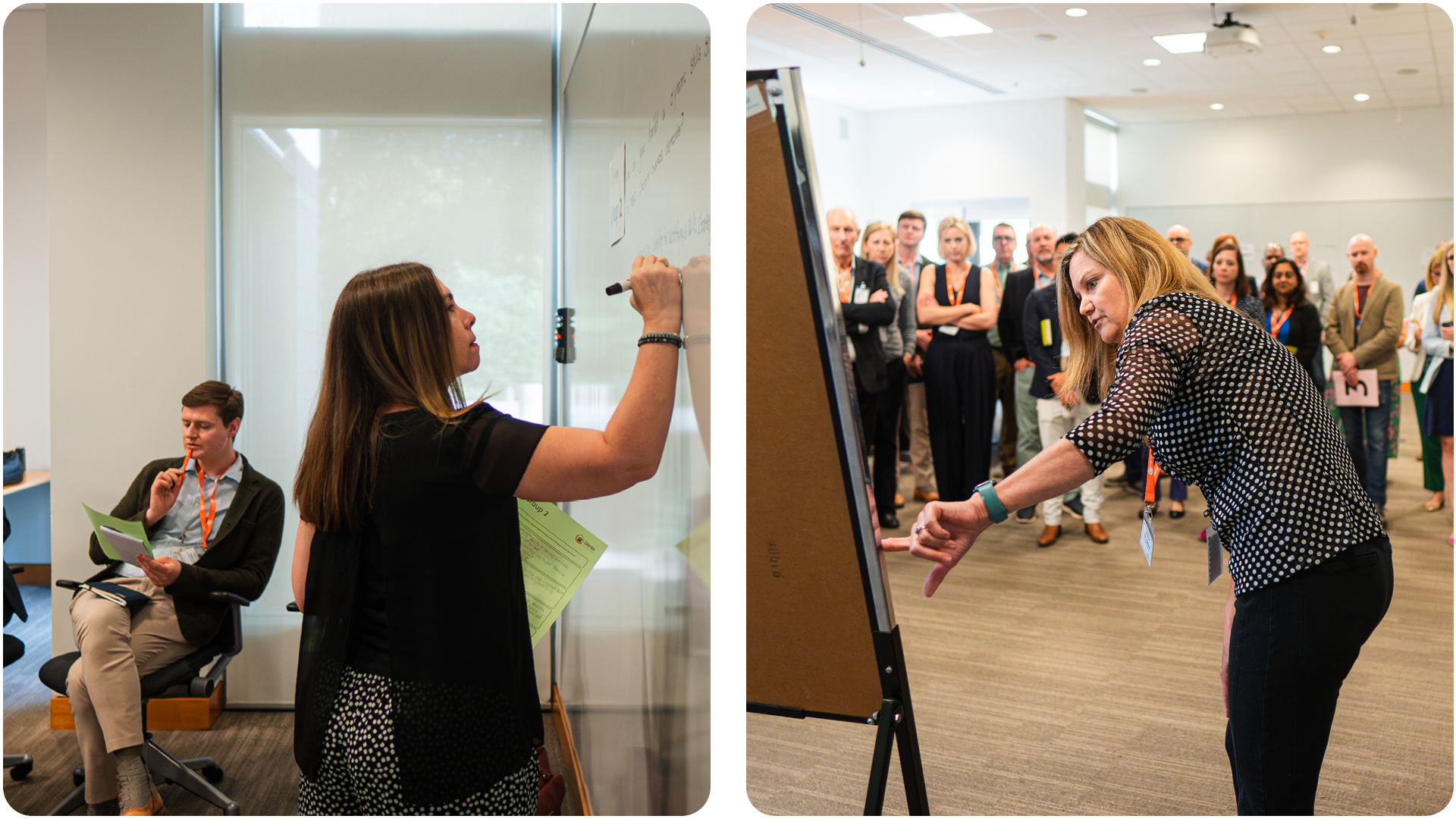
event participants

AI isn't the future, it's the now

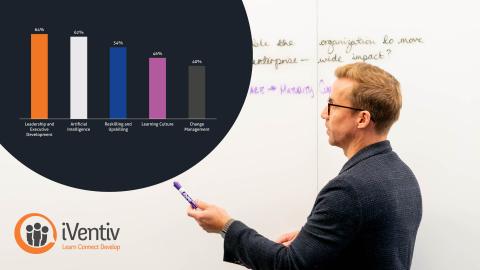
Artificial Intelligence has rapidly become the defining theme of 2025, with 55% of attendees picking it as their topic of interest. Previously bundled in with virtual and augmented reality on most L&D teams’ agendas, AI is now leading the conversation outright. For the iVentiv community, it’s not a future priority, instead, it’s a present imperative.

According to the groups in Europe and the USA, AI’s role is evolving from novelty to necessity. It is increasingly viewed not as a threat to human intelligence, but as a complement to it. The focus has shifted toward using AI to improve productivity, streamline administrative tasks, personalise learning, and preserve institutional knowledge. 

Organisations are also turning their attention to governance by establishing ethical frameworks and clear parameters for AI usage, especially when it comes to data protection, solution selection, and aligning tools with overarching business strategies. 

The overwhelming feeling was that the more that AI is integrated thoughtfully, the more space it creates for meaningful, human-driven interactions across the enterprise.

Leadership in an AI enabled world requires a new mindset

While AI is commanding much of the current attention, leadership is undergoing its own reinvention and remains a focus for almost 53% of attendees. Today’s most effective leaders don’t just embrace AI, they reshape themselves and their organisations to meet it with clarity and confidence.

Discussions throughout iVentiv sessions emphasised that leadership in this new context is less about command-and-control and more about mindset. Leaders must become frameless, capable of thinking beyond legacy systems and rigid structures. 

Delegates have discussed how, in their view, transparency, adaptability, and courage are essential to navigating uncertainty. The same goes for psychological safety, especially as AI introduces both new efficiencies and new anxieties. In this view, strategic narratives must go beyond tech to centre the employee experience, ensuring that transformation doesn’t overwhelm or alienate the people driving it. 

Ultimately, the consensus as it stands is that leading in the AI era demands not just digital fluency but emotional acuity.

Are skills-based strategies mandatory?

Across sessions, one strategic priority consistently rose to the top: the move to a skills-based organisation, which matched AI on the priority list for almost 56% of participants. Traditional job architectures are proving too rigid for today’s fast-paced business demands. Instead, organisations are rethinking how they define, develop, and deploy talent by focusing on capabilities rather than titles.

Seemingly, the successful skills-based strategies begin with a clear understanding of what capabilities currently exist within the organisation, what is needed to deliver on future priorities, and how to assess the gap between the two. Advocates of skills-based approaches also see executive alignment as critical, not just for approval, but for driving visibility and cultural traction.

Those strategies tend to start with the creation of a shared taxonomy of skills, with frameworks for upskilling that close both individual and business-critical gaps. L&D leaders are using pilots such as internal gigs or targeted workforce planning to demonstrate early value and drive adoption. While technology enables this shift, culture sustains it. The journey requires commitment, patience, and clear communication.

Reskilling is the new recruiting

For Talent leaders, the hiring market is no longer the only answer to talent gaps. In fact, many organisations are finding that external recruitment is becoming less efficient and more costly. As such, reskilling and upskilling are increasingly being treated not as side projects but as central pillars of organisational strategy.

Leaders are embedding continuous learning into their Talent agendas, reframing it as a proactive business function rather than a reactive support service. By mapping emerging skill needs, aligning them to workforce planning, and creating clear internal mobility pathways, leaders hope to address capability gaps while also improving retention, increasing agility, and reducing overheads. 

This isn’t about teaching everyone to code, the idea is to build a resilient, adaptable workforce that can respond to the unexpected with confidence.

The hidden lever of high performance? Recovery

A standout insight from iVentiv’s May–July sessions came not from the world of technology or frameworks, but from the science of energy. 

Nick Propper of Impact Human Performance challenged the widely held belief that peak performance requires constant output. Instead, he advocated for a model of oscillation, which involves alternating periods of effort and recovery to sustain effectiveness.

When individuals are in perpetual “go mode,” Nick says, their cognitive and emotional resources deplete, leading to stress, reactivity, and eventual burnout. Nick urged leaders to embed recovery into daily routines, through simple micro-practices, and introduced the idea of a “recovery menu”— a personalised toolkit of small, replenishing actions. 

The key takeaway? Recovery isn’t indulgent—it’s a strategic discipline. For sustained performance, Nick believes we must design for restoration, not just execution.

Coaching is a culture, not a programme

Many organisations invest in coaching and mentoring, but many L&D leaders feel that too few embed it deeply enough to drive real cultural change. At iVentiv, senior leaders explored what it truly takes to make coaching part of the organisational fabric.

The essentials are generally agreed on: define what coaching and mentoring mean in your context, secure visible buy-in from the top, and build a cadre of trained, trusted coaches. 

Accountability was a key theme too. Setting clear expectations, creating feedback loops, and modelling the desired behaviours have all helped leaders embed development into the day-to-day. When done well, coaching becomes more than an initiative, it becomes a core way in which the organisation learns, connects, and grows.

Future-proofing starts with Executive Development

To prepare organisations for external change, Executive Development pros increasingly want to go beyond traditional leadership training and focus on building adaptability, resilience, innovation, and strategic foresight.

This means rethinking programme design: integrating scenario planning, risk management, and data-driven decision-making; incorporating diverse and inclusive formats; and encouraging real reflection on current strengths and gaps. 

Engagement seems to increase when leaders see what’s in it for them, so communication must be clear and contextualised. Heads of Leadership Development say that it’s also important to break development into manageable, actionable parts. In short, the ideal future-ready executive is both agile and anchored, and development programmes must help them become both

Final thoughts: your opportunity as a c-suite leader

The landscape of Learning, Talent, and Leadership is shifting rapidly, but the opportunity for impact has never been greater.

Whether you’re launching a skills-based strategy, designing an AI governance framework, or reimagining leadership development, a key common theme in 2025 has been the importance of alignment. When initiatives are tied to business value, embedded into culture, and driven by curiosity, Learning leaders are seeing stronger results.

Now is the time to act, with clarity, courage, and collaboration.

Let’s continue the conversation. Join us for an upcoming Executive Knowledge Exchange near you, now.

Related Resources
Thumbnail: 
News category: 
Artificial Intelligence

More Insights

Is scaling leadership in a hypergrowth business just about doing more, faster? Or does it require a fundamental rethink of how leaders operate, how Talent functions deliver value, and how organisations balance structure with agility.

In this conversation with Richard Parfitt, Marketing Director, iVentiv, and Yulia Denisova, VP Talent & Development at Fanatics, we explore what it really takes to build leadership capability at pace in a business that has grown to 20,000 employees across 200 countries. From redefining prioritisation and decision-making, to introducing structure without bureaucracy, Yulia shares how Fanatics is evolving its talent strategy in real time.

The discussion also dives into the role of AI in leadership, the importance of maintaining human connection at scale, and why Learning and Development must shift from control to enablement. Watch the interview now.

As a CLO or Global Head of Learning and Talent, there is no shortage of Learning conferences, events, or webinars that you can attend. There’s a keynote speaker, exhibition stands, and a room full of excited Learning professionals ready and raring to go.

Those events can be a good opportunity to hear case studies and take a whistle-stop tour of what’s happening in the industry. But they aren’t always the best way to take away real, actionable ideas. If you’re in a senior role at a big organisation, especially, you can spend a lot of time speaking to early career attendees from smaller learning teams who aren’t dealing with the same challenges.

But big conferences and ‘sit and listen’ events aren’t the only option for Heads of L&D and Chief Learning Officers. In this blog, we look at how CLOs can take the pulse of the industry, connect with other senior executives, and find solutions to their challenges at collaborative, iVentiv events in locations around the world.

In a world where AI, shifting business priorities, and accelerating change are redefining how organisations develop talent, Learning leaders face a critical question: how do you build a culture where learning truly drives performance? 

In this conversation, William Varsos, Head of Global Learning at Marsh, shares practical insights on embedding learning into the flow of work, aligning development with business strategy, and avoiding the distractions of the latest trends. 

From designing impactful leadership learning to rethinking the role of AI in learning functions, his perspective offers a grounded look at what it really takes to create a sustainable learning culture today. Watch the interview now.

In today’s fast-changing business environment, the biggest Leadership challenge may not be skills, it may be mindset. In this conversation with iVentiv’s Hannah Hoey, Nikhil Shahane, VP Global Head of People Development at TechnipFMC, explores why adaptability, curiosity, and the ability to let go of legacy ways of working are becoming critical Leadership capabilities.

From navigating a “BANI” world to embedding learning in the flow of work, Nikhil shares practical insights on how organisations can shift from skills-focused development to cultivating the mindsets that enable leaders and teams to thrive through constant change. Watch our interview with Nikhil now.
 

In an industry where thousands of frontline employees may be trained in a matter of hours rather than months, hospitality leaders are being forced to rethink how learning, leadership, and communication really work. Many take the view that traditional onboarding, static compliance courses, and one-size-fits-all leadership models simply can’t keep pace with the speed, scale, and expectations of modern hospitality.

In this conversation, David Goddard, VP Talent at Levy Restaurants, shares how one of the world’s leading sports and entertainment hospitality brands is developing leaders that deliver even in the most high-pressure environments. Read the blog now and watch the interview with David to learn more.

As AI rapidly reshapes how work gets done, Leadership Development is facing a defining moment. If knowledge, once the cornerstone of leadership capability, is becoming increasingly commoditised, that could mean that judgement, the ability to make sound decisions, align people, and lead through uncertainty, will matter far more. 

In this interview, Abilitie’s Bjorn Billhardt, Founder and CEO, and Alex Whiteleather, Managing Director for Europe, at Abilitie explore how AI-enabled leadership simulations are transforming development by immersing leaders in realistic, high-stakes decision environments that build critical thinking, business acumen, and cross-functional collaboration.

For Chief Learning and Talent Officers navigating organisational change, flatter structures, and accelerating decision cycles, this perspective could offer a practical framework for rethinking Leadership Development in the age of AI, and a compelling case for why judgement, not knowledge, could provide the true competitive advantage. Watch the interview now and read about how Abilitie is shaking the world of Leadership Development with their brand new Case Challenges experiences.

Artificial Intelligence (AI) has emerged as a powerful force reshaping industries and revolutionising various aspects of our lives. One of the areas where AI is making a significant impact is Learning and Development (L&D).

As organisations strive to stay competitive in a rapidly changing world, many are turning to AI-powered solutions to enhance their training and education programs. 

In this blog, we will explore the nature of AI in Learning and Development initiatives, the key concepts surrounding it, and the challenges L&D leaders are raising when it comes to implementation. Read it now.


Learning, Talent, and Executive Development, and the businesses they serve, are undergoing rapid change. AI is changing the way that employees work and learn. External disruption means that the markets businesses operate in are nothing like they were ten years ago. And the expectations on Learning and Talent leaders are enormous.

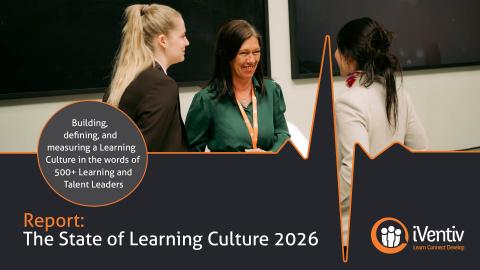
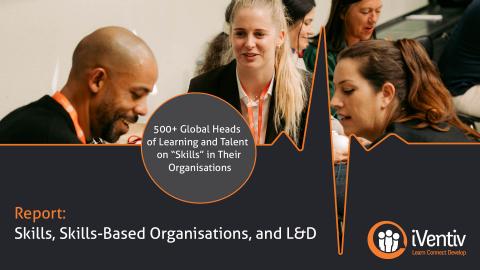
As a leader in L&D and Talent, what should you prioritise? iVentiv has surveyed almost 500 Global Heads of Learning, Talent, and Executive Development from 394 companies in 16 cities across 8 countries on three continents to find out what they are focusing on in their work. Together, their views provide a unique perspective on the state of Learning and Talent in 2026.

Read the full report for a detailed breakdown of the top topics, with expert comment from some of the leading thinkers in Learning and Talent Development. In this blog, we share some of the headline takeaways.

In this conversation, iVentiv’s Richard Parfitt (Marketing Director), Hannah Hoey (Content Director), and Kristy Kitson (L&D Strategist) share three key learning and development trends that they predict could shape the 2026 agenda for Chief Learning Officers.

Drawing on insights from conversations with Global Heads of Learning, Talent, and Executive Development across industries, they explore how L&D is moving into organisational design, why skills-based approaches are becoming standard practice, and how the AI conversation is evolving from experimentation to responsible, human-centred integration. 

Informed by conversations with Heads of Learning and Talent at hundreds of companies, this conversation is a unique perspective on what might be in store in 2026 for Learning leaders navigating the future of work. Read the blog now.

Artificial intelligence is no longer a project, an initiative, or a phase of digital transformation. It is fast becoming the environment in which modern organisations operate. 

That is the central message of the Udemy Business Global Learning & Skills Trends Report; a data-rich analysis built from more than 17,000 global enterprises and 85,000 instructors and brought to life in a recent iVentiv interview with Gráinne Wafer, Global Head of Field Enablement at Udemy Business.

For senior executives, the implications are becoming impossible to ignore: AI fluency, not just AI skills, is emerging as the defining strategic capability for the years ahead.

Watch our interview now and read Udemy’s report here.

Pages