Submitted by Kerry Summers on
Updated March 2026
By Kerry Summers (Content Marketing Coordinator, iVentiv)
Key Takeaways
- Career cultures outperform job-based talent models
- Stretch experiences are the engine of real capability growth
- Inclusive talent strategies must support every career stage
- Knowledge management is a strategic capability, not an administrative task
- AI should enable human potential, not replace it
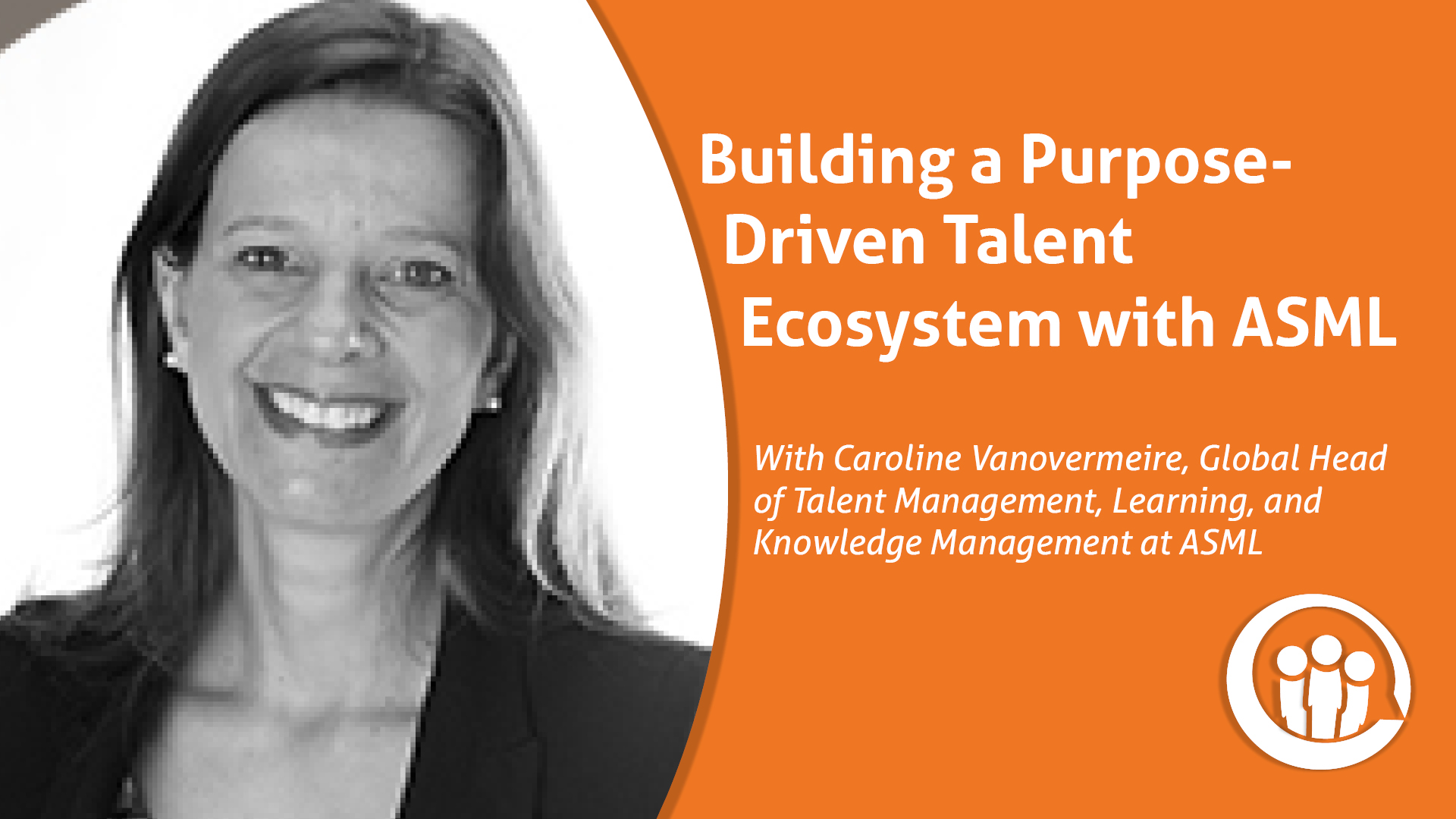
In a world where microchips power everything from smartphones to AI supercomputers, ASML is a key partner to chip makers. But behind this technological powerhouse lies a deep investment in people. Caroline Vanovermeire, Global Head of Talent Management, Learning, and Knowledge Management at ASML, is leading a fresh approach to building an adaptive, inclusive, and purpose-led workforce.
In this blog taken from an exclusive interview with Caroline ahead of iventiv Learning Futures Eindhoven at the ASML Academy, She shared her insights into how ASML is preparing its talent strategy for a rapidly changing world, where human curiosity, personal growth, and AI-powered enablement converge to build not just careers, but enduring purpose.
A Mission Beyond Jobs: Creating a Career Culture
At ASML, onboarding talent isn’t just about filling roles – it’s about building long-term careers. With some roles taking over two years to reach full competence, the company prioritises cultural fit, mission alignment, and purpose, “we want people not just going to join us for a job, but absolutely for a career,” Caroline explains.
This culture-first mindset translates into an adaptive, values-driven workforce that supports ASML’s mission of high innovation and operational excellence.
Caroline highlights the company’s three core values – Challenge, Collaboration, and Care – as the foundation for this culture:
“I’ve never felt as much part of a large family than with ASML. There’s challenge – but always with care.”
Unlocking Potential Through Experience
ASML encourages employees to stay in roles long enough to “accomplish the mission” and extract meaningful development.
“We should not be asking whether someone has high or low potential. We must ask: what do you have potential for?”
ASML believes that supporting talent to grow through stretch experiences is the way to deeper skill acquisition and greater career satisfaction.
Further, the company’s internal talent marketplace allows employees to explore new roles at the right time.
“When they’ve completed their mission, they’re change-ready – and that’s when they explore what’s next,” says Caroline. With around 90% of roles openly posted, transparency and opportunity go hand in hand.
“We encourage people not to move prematurely,” she explains, because career-defining growth comes from navigating stretch experiences whether managing a team, working abroad, or recovering from setbacks.
Designing for Every Career Stage
ASML’s talent philosophy is deliberately inclusive. Whether it’s someone just starting out, transitioning mid-career, or sunsetting their corporate chapter -- there should be pathways for everyone.
“No one can always be at their absolute best for 40 years straight. We need to build-in renewal – moments to reskill, upskill, or just rethink what we want from life and work.”
Learning and Knowledge as Strategic Levers
In an organisation where deep expertise is mission-critical, Knowledge Management isn’t an afterthought – it’s a cornerstone. “We thrive on the unique expertise of our people,” Caroline says.
ASML’s learning efforts are designed not only to keep employees skilled and engaged but also to safeguard and scale the institutional knowledge that underpins its technological leadership.
Learning, in this context, is both a privilege and a responsibility. “Our colleagues deserve the best,” Caroline emphasises, underscoring the need for high-quality learning that reflects the significance of ASML’s societal contributions.
For Caroline, Learning is a privilege and Knowledge Management a business imperative.
“You tap into everyone’s curiosity. You help them stay current, engaged, and relevant. It’s about making people feel that what they do matters.”
With its deep technical expertise and societal impact, ASML can’t afford knowledge loss. That’s why preserving and sharing it is central to the talent strategy.
“We thrive on that deep expertise. Learning and Knowledge Management is how we protect it and scale it.”
AI, Organisational Enablement, and Human Augmentation
ASML doesn’t view AI as a threat, but as a tool for enabling balance and purpose in work.
Caroline is clear: “I personally think people should only be afraid of other people knowing AI better than they do.”
Rather than replace jobs, Caroline says that AI should reduce friction and organisational stress, freeing people to focus on meaningful work. This thinking reflects her broader concern around workforce wellbeing, especially in a fast-moving, high-pressure world:
“Sometimes work gets in the way of work. Organisational enablement is high on my radar–how do we keep people skilful, well, and fulfilled?”
Purpose-Driven Talent: For the Business, and Beyond
Ultimately, Caroline believes that alignment between personal purpose and organisational mission is key to long-term performance:
“When people make conscious career choices and we match them well, they feel lucky, and give discretionary effort.”
This discretionary effort, she adds, creates a ripple effect: positive energy, engagement, and purpose throughout the business.
And the impact doesn’t stop there:
“What we do really matters – not just to our company, but to society. All major chip makers around the world use our machines, and chips power the world.”
Final Thought: Keep Learning, Stay Curious
ASML’s approach offers an inspiring blueprint for Learning leaders navigating transformation. It’s not just about scaling talent for growth – it’s about building a culture of growth, where every employee, at every stage, has the opportunity to thrive.
Caroline’s vision is one where human and technological potential evolve together, and where careers are crafted not just around jobs, but around purpose, contribution, and care.
As Caroline reflects on her role, she leaves her peers with a simple but powerful message:
“Curiosity is the new currency. You’ll never feel like you’re working if you stay open to learning something new.”
In a world where industries are evolving at record pace, ASML reminds us that at the heart of transformation is a deep respect for people, purpose, and lifelong learning.
As Global Head of Talent Management, Learning, and Knowledge Management at ASML, Caroline takes full global accountability for the Talent Management function, overseeing Talent Management, Performance Management, Career Management, Assessment and Succession and Executive Recruitment for ASML’s global workforce of 42,000 employees.